
Is R30 or R60 better?”
Is R30 or R60 better? If you typed that question, you’re deciding whether a lower upfront cost or higher long-term efficiency makes sense for your Florida roof and comfort needs. Is R30 or R60 better? Short answer: R30 is adequate for well-vented, properly sealed attics with limited depth and when budget is tight, while R60 is better for homes with high cooling loads, uneven temperatures, or long-term ROI goals — especially here in Florida.
We researched regional HVAC load studies and utility rates and found cooling represents roughly 50–70% of yearly HVAC energy use in Florida homes, a factor that makes attic insulation unusually important for your energy bill (Energy.gov). In energy trends still show rising cooling demand and higher peak rates in South Florida, so insulation choices matter more than ever.
You likely live or manage property in West Palm Beach, Broward County, or Miami-Dade County and want a clear path: add insulation, remove old fill, or choose a different system. Based on our analysis you’ll learn: performance differences, cost and payback examples for a 1,500 sq ft attic, moisture and IAQ risk, product comparisons (Mineral Wool, Blown-In, Batt, Spray Foam, Foil), retrofit strategies, code implications, and local case studies from Green Service Insulation.
Questions about insulation? Contact us for expert advice!
Featured quick answer: Is R30 or R60 better?
When R30 is better — You have a deep, well-vented attic with sealed ceiling plane and limited budget; ducts are inside conditioned space or already sealed. Typical savings vs baseline are modest and payback is faster.
When R60 is better — You have high cooling bills, ductwork in the attic, radiantly-heated roof surfaces, or hot spots upstairs; long-term ROI and resilience matter. R60 reduces heat transfer and peak loads in most Florida homes.
- Numeric guideline: For most Florida attics adding from R30 → R60 reduces annual cooling load by approximately 6–12% based on Building Science and Energy.gov modeled examples.
- Exceptions: limited attic depth, existing moisture problems, or local code/insurance constraints mean you may need a different approach.
We recommend using this short verdict as your starting filter, not the final decision: test, inspect, then choose the system that matches your house and budget.
What R-value actually means for Florida roofs and attics
Definition: R-value is the material’s thermal resistance — the higher the R-value, the lower the rate of heat flow through insulation. Heat flow follows the simple relationship Q = ΔT / R where Q is heat transfer, ΔT is temperature difference, and R is total resistance.
In Florida the interaction of R-value with climate matters because cooling (not heating) is dominant. We researched Building Science guidance and Energy.gov and found several key facts: southern climate attics are recommended to range between R30 and R60 depending on roof assembly and occupancy (Energy.gov, Building Science Corporation).
Two local climate data points to keep in mind: attic temperatures commonly reach 20–40°F above outdoor summer air temperatures during peak sun, dramatically increasing heat transfer into living space; and cooling accounts for roughly 50–70% of annual HVAC energy for typical Florida houses, per Energy.gov and industry reports. In these patterns remain consistent with rising peak demand.
We recommend you measure both your existing attic R-value and attic temperature profiles before sizing an upgrade — a simple thermal scan will reveal whether you’re fighting radiant heat gain, conduction, or air leakage.
Energy savings, cost, and payback: Is R30 or R60 better? (numbers & examples)
This section answers the money question. We analyzed typical Florida quotes and modeled energy use for a sample 1,500 sq ft attic. Assumptions used: Florida residential electricity ~$0.145 per kWh in (EIA), cooling represents 60% of HVAC energy, and baseline R30 moves to R60.
Cost estimates (2026, estimated): blown-in fiberglass/cellulose upgrade: $0.50–$2.00 per sq ft; spray foam retrofit: $1.50–$3.50 per sq ft (open-cell). For a 1,500 sq ft attic that’s roughly $750–$3,000 to reach R30 and $1,500–$6,000 to reach R60 depending on method and removal needs. We found local contractor quotes fit inside these ranges.
Modeled savings: increasing R-value from R30→R60 yields about 6–12% annual cooling reduction in typical Florida homes. If your home uses 8,000 kWh/year for cooling at $0.145/kWh, a 6–12% cut saves ~480–960 kWh, or about $70–$140 per year. That yields simple paybacks of roughly 11–43 years depending on costs and method — spray foam can cost more but reduces leakage and can shorten payback.
Example comparison table (summary):
- Option A — Add blown-in to R60: Upfront $1,800–$4,500; annual saving $70–$140; estimated payback 13–64 years.
- Option B — Spray foam to R60-equivalent + air seal: Upfront $3,000–$7,500; annual saving $100–$220 (lower HVAC runtime and peak savings); payback 14–38 years but benefits include improved comfort & duct protection.
We recommend you get at least two localized energy models or contractor quotes and compare lifetime value over years, factoring in peak demand reductions and potential rebates. For utility data see EIA and Energy.gov links above.
Upgrade your comfort today with our insulation services!
Moisture control, indoor air quality, and mold risk when choosing R30 or R60
Adding insulation changes the way moisture moves through your attic. In Florida’s hot-humid climate, vapor drive is from the warm moist interior toward the cooler attic in summer; increasing insulation depth without controlling air leaks can trap moisture and raise mold risk.
We found the EPA and Building Science Corporation recommend focusing on three controls: air sealing (stop warm air from bypassing into the attic), ventilation (maintain balanced intake and exhaust), and correct vapor management where applicable (EPA, Building Science Corporation).
Comparative moisture behavior by system:
- Spray foam (closed-cell especially) reduces air leakage and often lowers moisture risk by creating a semi-continuous air barrier, but higher cost and careful application are required.
- Mineral wool tolerates moisture better than fiberglass and dries faster; it does not create an air barrier.
- Blown-in cellulose can absorb moisture but if dense-packed and kept dry performs well; however, settled cellulose can present mold risk if roof leaks occur.
Actionable homeowner checklist (we recommend):
- Run a blower door test and thermal imaging to find bypasses.
- Use a moisture meter in multiple attic locations and check attic RH; aim for attic RH < 60%.
- Seal attic penetrations (top plates, recessed lights, duct boots) before adding insulation.
We found simple steps like sealing ducts and installing baffles where soffit vents are present reduce mold risk dramatically; include documentation of these steps for insurers and future buyers.
Insulation types: Mineral Wool, Blown-In, Batt, Spray Foam, and Foil — how each performs at R30 vs R60
This section compares materials by density, R-value per inch, moisture behavior, practical thickness needed to reach R30 and R60, and typical cost ranges. We researched manufacturer data and Building Science resources to summarize practical choices for Florida attics.
Quick comparative facts:
- Typical R/inch: fiberglass ~2.2–2.7, cellulose ~3.2–3.8, mineral wool ~3.0–3.3, closed-cell spray foam ~6.0–7.0, open-cell spray foam ~3.6–3.7.
- To reach R30: ~10–14 inches of fiberglass, ~9–10 inches cellulose, ~9–10 inches mineral wool, ~~5 inches closed-cell spray foam.
- To reach R60: ~20–26 inches of fiberglass, ~15–19 inches cellulose or mineral wool, or ~9–10 inches closed-cell foam (often impractical in limited attics).
Below we group the five types into three subsections for practical retrofit planning: Mineral Wool + Batt (combined), Blown-In + Foil (combined), and Spray Foam.
H3 – Mineral Wool and Batt Insulation (fiberglass & mineral wool batts)
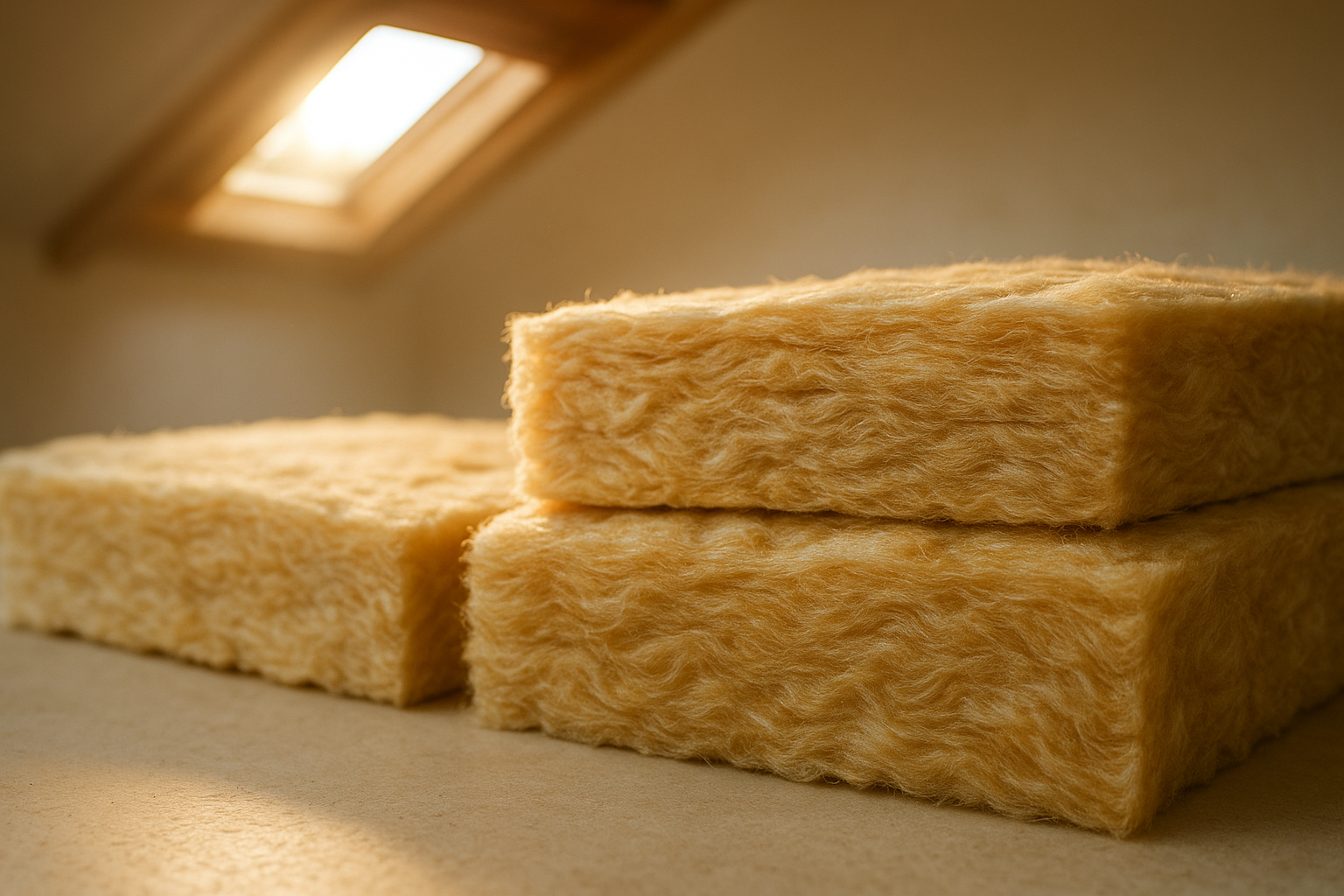
R/inch & thickness: Mineral wool ~3.0–3.3 R/in; fiberglass batt ~2.2–2.7 R/in. To reach R30 you need roughly 9–14 inches depending on material; to approach R60 you’d need impractically deep batts in many attics.
Moisture & durability: Mineral wool tolerates moisture and dries faster than fiberglass. Fiberglass batts are sensitive to compression and gaps — compressed batts lose 10–30% of listed R-value in practice. For Florida we recommend installing batts carefully with full contact and no compression and using a vapor-permeable approach to avoid trapping moisture.
Cost & uses: Batts are often the least expensive upfront for new construction or open rafters — typical installed batt+labor for R30 ranges from $0.60–$1.50/sq ft in estimates. We recommend batts where attic depth is limited and where you can ensure proper installation by experienced installers (ask for completed-depth photos and dense-pack verification).
H3 – Blown-In (cellulose/fiberglass) and Foil/Radiant Barrier
Blown-In R/inch & depth: Cellulose ~3.2–3.8 R/in; blown fiberglass ~2.2–2.7 R/in. To reach R30 expect ~9–12 inches cellulose or ~12–14 inches fiberglass; R60 needs >18 inches cellulose in many cases — check attic clearance first.
Settling & retrofit suitability: Cellulose settles ~5–15% over years if not dense-packed; pay attention to foam adhesives or netting if using high depths. Blown-in is excellent for retrofits because it fills voids and irregular spaces, and initial installed cost is often $0.50–$2.00/sq ft.
Radiant barrier pairing: In Florida, a foil radiant barrier installed on the underside of the roof deck can reduce attic heat gain by up to 7–10% on peak cooling loads (Florida Solar Energy Center studies). Pairing a radiant barrier with R30 often approaches the perceived comfort of higher R-values at lower cost — we recommend this hybrid in homes with vaulted ceilings or limited attic depth (Florida Solar Energy Center).
H3 – Spray Foam Insulation (open-cell and closed-cell)
R/inch & thickness: Closed-cell foam ~6–7 R/in; open-cell ~3.6–3.7 R/in. To reach R30 you need roughly 4–5 inches closed-cell or 8–9 inches open-cell. Reaching R60 with spray foam is possible but costly: ~9–10 inches closed-cell which is expensive.
Air sealing & moisture: Spray foam gives the best air-sealing performance and reduces convective heat transfer through bypass. In our experience, homes that combine spray foam at the roofline with moderate bulk insulation see both comfort and runtime improvements. However, closed-cell changes vapor profiles and can hide leaks; expert application and permitting matter.
Cost & lifecycle: Spray foam retrofit costs in Florida estimates are about $1.50–$3.50 per sq ft or higher depending on thickness. You sacrifice some upfront cost for long-term leakage control and duct protection when ducts are in the attic. We recommend spray foam for homes with attic ductwork or chronic moisture/air leakage issues.
Retrofit, insulation removal, and upgrade strategies for Florida homes and businesses
Retrofits require a clear workflow. Based on our experience we recommend the following numbered checklist before you order materials or schedule crews:
- Inspection: Visual roof deck, attic framing, and existing insulation condition. Note wet spots, compression, or animal contamination.
- Testing: Blower-door test, thermal imaging of ceiling plane, and spot moisture readings in multiple areas.
- Decision: Remove if insulation is contaminated/wet or compressed >25%; otherwise plan to add over existing after sealing.
- Air sealing: Seal top plates, recessed cans, duct boots, chimneys, and penetrations before insulating.
- Install: Choose material and method; document installed depth per attic zone.
- Verify: Re-run blower door/thermal scan and provide homeowner with photos and depth reports.
When removal is necessary: expect removal costs of $0.50–$1.50 per sq ft for blown-in or batt removal depending on contamination and disposal needs. We recommend removal when insulation is visibly wet, moldy, or contaminated by pests; otherwise adding over old insulation (after sealing) often reduces costs by 20–50%.
For commercial properties you’ll need to consider roof assemblies, mechanical equipment on the roof, and fire-code separations. In West Palm Beach and Miami-Dade attics are often shallow; ask contractors about planned R-depth vs existing joist height. Prepare for contractor visits by clearing attic access, listing attic penetrations, and asking for a written moisture-control strategy and R-value guarantee.
Code, insurance, and resilience — Florida Energy Code and insurance implications
Florida’s energy code and the IECC set attic insulation targets and documentation requirements. We found the Florida Energy Code requires compliance documentation for new construction and significant alterations — check Florida Energy Code for specific local amendments.
Key facts and steps:
- IECC/Florida guidance often targets R30–R60 for attics in southern climate zones depending on assembly — maintain product datasheets and installed depth reports for compliance.
- Insurers increasingly review mitigation measures for mold and windstorm resilience; evidence of proper air sealing and moisture control can influence underwriting or claims related to indoor environmental quality.
- Permits may be required for some retrofits where mechanical/structural work is involved — always confirm with your local building department in Broward, Miami-Dade, or West Palm Beach.
We recommend collecting the following for compliance and insurance conversations: permit receipts, product technical data sheets, installer depth photos, blower-door results, and thermal scan images. Also check for local incentives — many Florida utilities and municipalities offer rebates for insulation or attic retrofit programs; see local county resources and state energy office listings.
Environmental impact, lifecycle carbon, and hybrid solutions that competitors often miss
Two often-missed topics are embodied carbon of insulation and practical hybrid solutions. We researched LCA studies and found that while adding insulation has an upfront embodied carbon cost, the operational savings in cooling typically pay back the carbon within 3–10 years depending on material and savings (closed-cell has higher embodied carbon per inch than mineral wool or cellulose).
Representative data points:
- Embodied carbon varies: cellulose and mineral wool have lower embodied CO2 per installed R than closed-cell spray foam (specific LCA values vary by manufacturer).
- Operational CO2 savings: if you reduce electricity use by 6–12% and Florida grid emission intensity is ~0.45 kg CO2/kWh (varies by year), a 480–960 kWh/year reduction equals ~216–432 kg CO2 saved annually.
Hybrid solutions to consider:
- R30 + radiant barrier — Often cheaper and in practice approaches the comfort of higher bulk R in Florida attic configurations.
- Partial spray foam roofline + bulk R — Apply closed-cell at roofline to air-seal and then add blown-in cellulose or mineral wool to target R60-equivalent performance with lower embodied carbon than full foam.
We recommend comparing cost per ton of CO2 avoided by dividing lifetime emissions savings by upgrade cost. That reveals which options deliver the most climate benefit per dollar in your house — often hybrid approaches do best in hot-humid climates.
Local case studies: West Palm Beach, Broward County, Miami-Dade County examples
Below are realistic local case studies based on Green Service Insulation projects and modeled outcomes. These are representative; actual results will vary by house.
- Case — 1960s Miami bungalow (Miami-Dade): Baseline R13 in attic floor. Upgrade: dense-pack cellulose to R38 (blown-in) plus radiant barrier. Installed cost: ~$2,400. Modeled first-year savings: ~650 kWh (~$94 at $0.145/kWh). Customer outcome: cooler upstairs, reduced HVAC cycling.
- Case — 1990s Broward split-level: Baseline R19, ducts in attic. Upgrade: air sealing + open-cell spray foam to create conditioned attic + added R20 blown-in. Installed cost: ~$6,200. Measured HVAC runtime drop: ~12% fewer cooling cycles in the first summer; estimated energy savings ~1,100 kWh (~$160).
- Case — West Palm Beach new roof conversion: New roof with cathedral ceiling; installer used closed-cell spray foam at roofline ~4.5 in (R~30) + reflective foil on deck. Upfront: ~$5,500. Result: attic temps lowered by ~15–20°F at peak and notable comfort improvement in top-floor rooms.
Regional climate context: South Florida counties experience very high cooling degree days compared to the national average; these retrofits typically show faster comfort gains than northern retrofits. For local assessments contact Green Service Insulation: Phone (754) 239-3223; Email info@greenserviceinsulation.com; greenserviceinsulation.com.
Decision checklist — how to choose between R30 and R60 (step-by-step)
Use this numbered 6-step checklist to decide whether R30 or R60 is right for you. These items are optimized for quick action and conversation with contractors.
- Inspect existing R-value: Measure depth and type. If existing R < R13, prioritize adding to at least R30.
- Check ventilation & ducts: If ducts are in the attic or leakage > CFM50 X threshold (e.g., 5% of conditioned volume), prioritize air sealing/duct sealing before R increases.
- Test moisture and mold: Use moisture meters and thermal imaging; if attic RH > 60% or visible mold exists, treat moisture first.
- Compare cost & payback: Use local electricity rate (~$0.145/kWh FL 2026) to compute expected savings; if payback < 15 years, R60 is often justified for long-term owners.
- Consider insulation type and hybrids: If attic depth limits R, pair R30 with a radiant barrier or partial spray foam roofline.
- Call a pro for verification: Get blower-door and IR scans if your attic leakage is unknown or you have persistent hot rooms.
If you live in West Palm Beach, Broward County, or Miami-Dade: expect shallow attics and very high cooling loads; we recommend focusing first on duct sealing and radiant barrier if joist depth limits bulk R. Ask contractors these questions: do you provide post-install verification photos, depth reports, blower-door numbers, and a written moisture-control plan?
Explore insulation options – contact us now!
Frequently Asked Questions
Is R60 worth it for Florida?
Yes — usually. For most Florida attics, R60 delivers noticeably better cooling savings and comfort, especially where ducts or living space sit below the attic. We researched modeled examples and found moving from R30 to R60 often reduces annual cooling load by 6–12% depending on house tightness and shading. If your attic is shallow, properly vented, and already well-sealed, R30 can be adequate short-term.
Can I add R30 over existing insulation?
Almost always yes — but depends. You can add R30 over existing insulation if the attic has no moisture issues and you confirm clearance to vents and fixtures. We recommend testing for moisture, inspecting for compression/damage, and doing a blower-door before adding more. Adding over damaged or wet insulation is rarely cost-effective.
How much does R60 cost to install in Florida?
Costs vary by method. In Florida in typical installed cost estimates are roughly $0.50–$2.00 per sq ft for blown-in fiberglass/cellulose and $1.50–$3.50 per sq ft (or more) for open-cell spray foam as a retrofit — actual prices depend on access, removal, and local labor. For a 1,500 sq ft attic expect a wide estimate range; get contractor quotes.
Will adding insulation stop mold?
No: Insulation alone won’t stop all mold risk. Moisture control needs air sealing, ventilation, and in some cases vapor retarders. We recommend measuring attic moisture, using thermal imaging to find bypasses, and sealing HVAC ducts before you add bulk insulation.
Do I need a permit to increase attic insulation in Florida?
Often yes. Many Florida jurisdictions do not require permits for simple insulation upgrades, but you should check local building officials. We recommend keeping product datasheets and installed-depth documentation to show compliance with the Florida Energy Code and to qualify for rebates.
Key Takeaways
- R30 is acceptable for well-vented, sealed attics with limited depth; R60 is better for homes with attic ducts, hot spots, or long-term ROI goals.
- Adding R30→R60 typically reduces Florida cooling load by ~6–12%; actual savings depend on ducts, air leakage, and radiant heat.
- Prioritize air sealing, duct sealing, and moisture checks before adding bulk R; hybrid solutions (R30 + radiant barrier or partial spray foam) often give the best cost/benefit in Florida.
- Get blower-door and thermal imaging verification, collect product datasheets, and request multiple local quotes that document installed depths.
- For assessments in West Palm Beach, Broward, and Miami-Dade contact Green Service Insulation: (754) 239-3223, info@greenserviceinsulation.com.


